





EAST LANSING – Michigan State University’s College Assistance Migrant Program (CAMP), which has helped hundreds of farmworker students pursue higher education, is facing an uncertain future after being cut from the university’s budget.
CAMP Director Luis Garcia said the decision has left students, families, and staff deeply concerned.
“Well, the recruitment we primarily do is from Michigan, but also from feeder states like Florida, Texas, and California,” Garcia explained. “The bulk of our students come from Michigan. A lot of these families work here during the season and return south in the winter. That’s the connection to Michigan.”
Garcia emphasized that MSU’s support for farmworker students has long been central to its mission as a land-grant institution. “If you look at CAMP students or farmworker students, they’re the core of what Michigan State University is about. Our first reason for existing was agriculture,” he said.
Still, Garcia acknowledged that misconceptions about the term “migrant” complicate public understanding of the program. “When we say migrant, you and I understand that as people moving from one state to another following the crops. But the general public often assumes these are international students here illegally. In fact, in order to participate in CAMP, students must be U.S. citizens or permanent residents,” he said.
Parents of current CAMP students have already expressed fears about the program’s future. “Some parents asked me if they should tell their daughter to pack her clothes and come home,” Garcia said. “I had to explain, no, MSU is covering this academic year. We’re looking at future years after this one.”
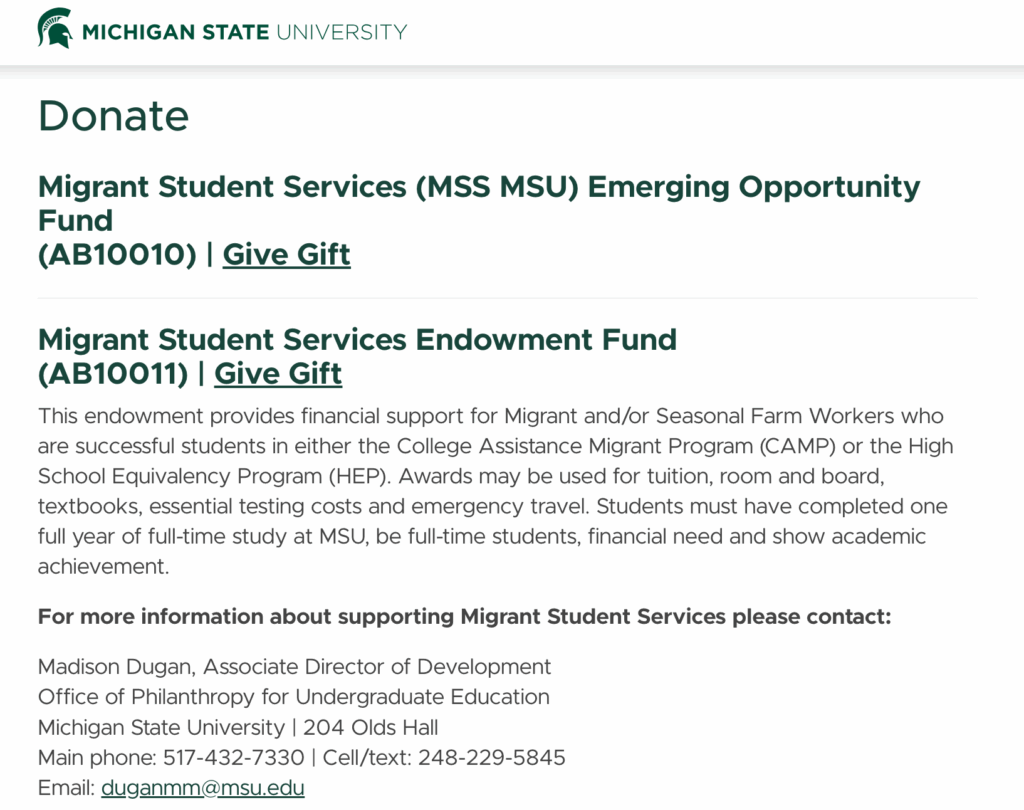
University officials confirmed that the administration has committed to funding CAMP for one year despite the budget cut, giving students security through the current academic cycle. Looking ahead, MSU is seeking community support to keep the program alive by accepting financial contributions to the Migrant Student Services Endowment Fund.
The program’s fate is now tied to shifting university priorities under new leadership. “As soon as the President (Trump) came in, it was clear he wanted things aligned with his way and his priorities.
“We’re evidently not a priority,” Garcia said. “It’s really interesting because we’re talking about the people who help feed America. And to say they’re not a priority—I don’t understand that.”
Garcia said that while the university is exploring options to secure funding, outside support will be critical to keeping CAMP alive. “Any money we take in right now, people that want to donate, it’s really going for student support,” he said. “The ones that are going to survive are the ones that get institutional support. And I’ll be real clear with you: I plan on surviving here. We’re moving, we’re shaking every tree to see what we can do to get support.”
Despite the setback, Garcia remains optimistic that the community will rally around the program. “I think there are a lot of good people out there that understand what we do, they appreciate it, and are going to be supportive of this.”